Epicentro Politico Roundtable Discussion
"The emerging danger of racist groups in the immigration debate"
Host: Jose Lopez Zamorano
Guests: Ricardo Juarez, Coordinator of Mexicanos Sin Fronteras
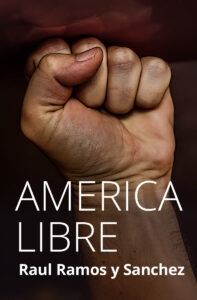
and Raul Ramos y Sanchez, author of America Libre

Aired May 18-20, 2007

Part One

Host: You are listening to Epicentro. I am Jose Lopez Zamorano. From the headlines, we move on to our round table discussion. Today we present a topic that worries many activists and the general Latino community as well. It is the growth of racist groups who back the use of violence against Hispanics. According to the Southern Poverty Law Center, a civil rights organization, extremist groups have grown by 40% since 2000 and today number 844 organizations dedicated to fomenting hate and violence toward immigrants -- and often against all Latinos. To discuss this topic we have at our round table Ricardo Juarez, the coordinator of Mexicanos Sin Fronteras in Washington and Raul Ramos, author of the novel America Libre. Welcome to Epicentro.

Juarez: Thank you.

Ramos: A pleasure to be here.

Host: Starting with you, Ricardo, you recently took part in a pro-immigrant march in Washington on May 1st and witnessed up close an incident with one of these extremists. Tell us what happened.

Juarez: Well, on the first of May we organized a rally in Washington D.C. from the immigrant community. At roughly one in the afternoon, we were approached by Tyler Joseph Froatz, who has since been identified as a member of the Minuteman organization. He arrived carrying an anti-immigrant sign and had a very aggressive attitude. He asked if we had permission to hold a rally and asked us to prove our citizenship, saying only United States citizens have the right to protest.

Host: Did he confront you physically?

Juarez: He began insulting us, especially those of us who do not look white. And from the insults, he escalated to shoving and violence, which took place in an area that included over one hundred people including families with women and children.

Host: What was the people’s reaction?

Juarez: The people only watched him. Our security team and the organizers were on the scene by then, gathering around him. We asked him to leave, but from what I could observe, he seemed intent on provoking a situation that would come to blows.

Host: I understand someone was shoved.

Juarez: With all his pushing and aggression, a woman was injured when he knocked her to the ground.

Host: When did the police arrive?

Juarez: We asked him to go away or we would call the police. When he refused to leave, we called the police in front of him.

Host: Was he arrested?

Juarez: He fled on the first occasion and returned later in a disguise, wearing different clothes and a cap. I went to get the police and pointed him out and he was arrested.

Host: I understand the police found something amazing at his house.

Juarez: Yes, following his arrest the police found that he was armed while in the park. He was carrying weapons in his backpack and also had more weapons in his car. The FBI and other police agencies found an arsenal in his home that included more than twenty rifles, pistols, and other weapons.

Host: Ricardo, you and others took a pamphlet from his hands. Tell us what was on that pamphlet.

Juarez: The pamphlet pictured and described a military column of tanks, helicopters and soldiers under a U.S. flag firing on a group of immigrants crossing the border with a pregnant woman among them.

Host: Well, Raul Ramos, author of the novel America Libre, your book accurately described such incidents of racist violence against immigrants. Give us your opinion of this incident. Do you believe it could happen again?

Ramos: Very possibly. Jose, I have been studying and investigating these groups since I began my book in 2004 and during that time I’ve become familiar with how they were formed. For example, many of these groups have been around for decades and in recent times have used the undocumented immigrants as their enemies of the day. The KuKluxKlan, the Aryan Brotherhood, and the American Nazi Party have existed for many years. Lately, they have taken advantage of the immigration crisis to recruit new members. As you explained, these groups have grown by 40% for this very reason. At the same time, these hate groups are now disguising themselves in many cases as political organizations. For example, the Coalition Against Illegal Immigration is in reality an Internet warehouse where a variety of hate groups can present themselves as legitimate organizations. Also dressed in respectable clothes are the Minuteman Project, Save our State, The Emigration Party of Nevada, and many others. As you know, Jose, America Libre supposes a liberation movement on the part of Latinos in reaction to Anglo prejudice. The book is clearly a warning against the dangers of extremism and has received criticism from these groups. And some of their reactions have been chilling.

Host: Tell us about the contacts you’ve had with them.

Ramos: I’ve conducted interviews with various principals of these groups. One of them, Dr. Daneen Peterson, told me during an interview, “There WILL be a war.” I also found that one of these organizations had written in response to my book, “We ain’t the only ones talking about a revolution.”

Host: Tell us in the short time we have left in this segment, what are these plans for war?

Ramos: Well, whatever plans they have, they keep to themselves. But even publicly, they leave no doubt that they envision a revolution and a civil war in the United States.

Host: Very well. There we have a warning call for the authorities to take a role in this disturbing affair that presents a danger to the community. In our next segment, we will explore what these racist groups have to do with the immigration debate. I am Jose Lopez Zamorano, Epicentro will continue.


Part Two

Host: You are listening to Epicentro. I am Jose Lopez Zamorano. We continue our round table discussion with a disturbing topic for the Hispanic community, the growth of racist groups who foment violence against immigrants. We continue now with Ricardo Juarez, coordinator of Mexicanos Sin Fronteras and Raul Ramos, author of America Libre.

These racist groups say they are against illegal immigration. But in reality, it seems that any person who appears to be a Latino can be their victim. For example, David Richardson, a young man of Mexican origin born in the United States, became the victim of a group of neo-nazi youths in Texas. He was savagely beaten, burned, sodomized, and doused in Clorox. Ricardo, you participate in many demonstrations. Why do you perceive this dramatic surge in violence against Latinos?

Juarez: We believe the proliferation of these groups and this type of violence has been fed by public political messages at the local and federal level. These groups have found a justification for their actions in the many national security discussions when immigration has been equated with terrorism.

Host: Do you believe the lack of immigration reform has created a vacuum that these people are filling with their violent ideology?

Juarez: Certainly they believe that demonstrations by immigrants are outside the law, that they should not exist. And they use that as an excuse for their attacks. Until we have immigration reform, undocumented immigrants will be vulnerable to their attacks.

Host: Raul, before 2002 these groups appeared fractured, their leaders dead or retired, then the immigration reform movement, with its thousands and thousands of Hispanics taking to the streets, breathed new life into them. Is this right?

Ramos: Precisely. Part of what’s motivated these organizations in the past has been hate against other minorities that, at that time, were more central to the public discourse. Today, they have launched themselves against Latinos because they are clearly in the news. As part of their litany of hate, they accuse all undocumented immigrants, and at the same time all Latinos, as sources of disease, crime, drugs, alcoholism, in effect, the cause of all the nation’s ills. Even when they do not act out their violence directly, this kind of hate speech … accusations of disease, alcoholism, of abusing hospitals and schools … foments hate on the part of the general public. And that’s a danger as well.

Host: There is no doubt this is a danger. But how do you explain the polls that continue to show the majority of the U.S. public is in favor of reform that includes the legalization of undocumented workers?

Ramos: In times of tension and pressure, extremists always gain power far beyond their number. Let’s look at Russia, for example, where the Bolsheviks were a minority but managed by their extremism to topple the government. In our time, although these groups represent a small fraction of the public, they gain an undue influence because their message of hate stirs hatred in others.

Host: Ricardo, where does one cross the line between free speech and hate speech against illegal immigrants and Hispanics in general?

Juarez: I believe the line is crossed in the tolerance of the public authorities. We believe those charged with protecting private rights have been extremely tolerant of groups that, for example, are hunting immigrants on the border.

Host: Do you believe these groups should be banned?

Juarez: No. But we believe the authorities should continue to investigate this group’s activities to ensure they remain non-violent.

Host: Raul, an internal document of the Department of Homeland Security indicates that these groups are not a priority for the agency. They prefer to confront external threats to the United States. What can our community do in the face of this apparent governmental indifference to confront this anti-immigrant mobilization?

Ramos: To me it’s most important to know these people exist and to confront their messages of hate.

Host: Confront in what manner, Raul?

Ramos: With the truth. Cockroaches run from the light. And these people flee from the truth. Confronting these people with the truth about undocumented aliens and Latinos is more important than confronting them physically.

Host: Practically speaking, Ricardo, how should people taking part in a march react when this type of person tries to provoke them?

Juarez: The first thing to do is not react to their provocations. Second, when one of these people escalates the encounter from verbal aggression to physical aggression, they should contact the march’s security team, then find a telephone and call the police.

Host: Ricardo, I understand you are taking legal measures against the person who infiltrated your march on the first of May.

Juarez: First, we are making a public statement to make people aware that this incident was an act of aggression against the community, not against an individual. We believe this person’s objective was against the immigrant community. We are also pursuing legal means to prosecute this person as a terrorist.

Host: Raul, we’re seeing violence against immigrants, we’re seeing violence on the part of the police in MacArthur Park in Los Angeles, we’re seeing an angry Mexican community in Chicago. What are the lessons over what is happening for the public, the government, and these groups?

Ramos: To me the lesson is to view the situation calmly. These extremist groups exploit fear, exploit anger, exploit hate, in both communities – Hispanic and Anglo. Looking at the situation clearly, without anger, is the best course. Because these groups want to steer these incidents toward violence. Therefore, we need to remain calm – especially when in public.

Host: Ricardo, what is the lesson for independent groups like yours who struggle for immigration reform?

Juarez: The first lesson is for the organizers to remain constantly alert so we can provide security for the people of our community. The second lesson is to be aware that these groups have passed from verbal violence to physical violence, as evidenced by the weapons that we found on the person who tried to provoke us. Another lesson is for these extremists to realize they cannot take violent actions against our community with impunity. Impunity is a weapon for them. Our attacker will be prosecuted in the courts and will serve as an example for the rest.

Host: Very well. Here we will add that this should be a warning sign to the authorities not to ignore these groups. In 2004, over seven thousand hate crimes were committed in the United States and Latinos comprised the largest number of victims. Well, Ricardo Suarez, coordinator of Mexicanos Sin Fronteras and Raul Ramos, author of America Libre, thank you for being on Epicentro.

Copyright ©2007. Hispanic Communications Network. ALL RIGHTS RESERVED.


RETURN TO TOP OF PAGE


Visit this site hosted by Raul Ramos y Sanchez